10 Timeless Leadership Principles
Gandhi Jayanti, celebrated annually in India on October 2nd to mark the birth anniversary of Mahatma Gandhi, is a global reminder of the impact one individual can have on the world. In 2007, the UN General Assembly adopted resolution A/RES/61/271 (June 15), declaring October 2nd the International Day of Non-Violence.
When we think of Gandhi, what stands out is his ability to lead without holding an official title or political office. He showed that true leadership is not granted by authority. It is earned through personal influence and a compelling vision that unites people toward a shared purpose.
Stephen Covey defined leadership as communicating people’s “worth and potential” so clearly that they come to see it in themselves. A leader’s primary responsibility is to consistently affirm the value and potential of others. When individuals feel valued, their performance rises, and the whole organization benefits.
Few people possess every leadership trait in equal measure, but being aware of these qualities helps us develop them intentionally. I have identified 10 common traits across leaders from all walks of life that have stood the test of time.
1. Vision. The paramount responsibility of a leader is establishing a clear direction. A compelling vision turns abstract potential into concrete reality.
Satya Nadella began reframing Microsoft’s mission in 2014 and distilled it in 2015, moving from “a computer on every desk and in every home” to “empower every person and every organization on the planet to achieve more.” It was simple and inclusive, and it shifted the company toward cloud innovation and collaboration.
Steve Jobs offered another illustration. Upon returning to Apple in 1997, he cut dozens of products and focused the company on a handful of elegant, user-centered devices. That revived a near-bankrupt company and reshaped multiple industries.
Historically, Martin Luther King Jr.’s “I Have a Dream” speech articulated a moral vision so vivid that it helped turn fragmented efforts into a unified national force.
A vision must stretch us beyond our comfort zone. Whether it is an ambitious career goal or a commitment to being an engaged parent, a strong vision gives daily effort its purpose. Dr. A.P.J. Abdul Kalam put it memorably: a real dream is not what you see while sleeping, but what “does not let you sleep.”
Gandhi is widely quoted as saying:
“The difference between what we do and what we are capable of doing would suffice to solve most of the world’s problems.”
2. Integrity. Integrity means doing the right thing when no one is watching, keeping stated values and actual choices consistent. It builds trust, eliminates hidden agendas, and fosters personal resilience.
Warren Buffett has long said that when hiring, he looks for intelligence, energy, and integrity, and that without the third, the first two become dangerous. His decades of transparent communication with shareholders reflect this principle.
Gandhi wrote:
“One man cannot do right in one department of life whilst he is occupied in doing wrong in any other departments. Life is one indivisible whole.”
Aligning actions with ideals leads to lasting credibility. In a 1913 piece, Gandhi captured the idea this way:
“If we could change ourselves, the tendencies in the world would also change.”
(This is the verifiable root of the popular “Be the change you wish to see” line, which has no record in his writings.)
3. Passion. A leader’s enthusiasm is contagious. Genuine energy sets a standard for those around you.
Lionel Messi has won nearly every major honor in football, yet he still plays and trains with the joy and intensity of his teenage years. That sustained drive lifts his whole squad.
In business, Steve Jobs’s intensity for design and user experience was authentic obsession, and it raised the bar for entire product categories. Oprah Winfrey built a media empire on genuine curiosity and empathy.
True passion emerges when deep interest meets high competence. It turns work from a series of tasks into a meaningful pursuit.
A saying often attributed to Gandhi, though its origin is uncertain, traces the chain from thought to destiny: your thoughts become your words, your words your actions, your actions your habits, your habits your values, and your values your destiny.
4. Discipline. Discipline is the capacity to perform necessary tasks consistently, regardless of immediate inclination. Jim Rohn is popularly credited with the idea that we all choose between the pain of discipline and the pain of regret: discipline weighs ounces, regret weighs tons. (The idea circulated as an adage before him.)
High achievers from Serena Williams, practicing serves for decades, to Shigeru Miyamoto, refining game mechanics over thousands of hours, rely on deliberate effort more than raw talent.
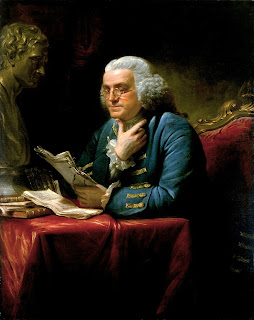
Jeff Bezos built operational discipline into Amazon through the “two-pizza team” rule and written narrative memos instead of slide decks. These practices forced clarity as the company scaled. Benjamin Franklin, who structured his days around deliberate self-improvement, shows that discipline is as much a personal system as a public virtue. He was probably one of the pioneers of the modern deliberate practice we speak about.
When grounded in a meaningful “why,” such as staying healthy to care for loved ones, discipline shifts from willpower to routine.
Gandhi is credited with: “Strength does not come from physical capacity. It comes from an indomitable will.”
5. Clear Goals. A compelling vision needs structured goals to turn intent into progress. Writing down clear targets across professional, personal, and health domains provides daily focus.
Effective goals are specific and time-bound, for example: “Complete a 10K run in under 55 minutes by December 1st.” Reaching a goal builds momentum, but growth lies in setting the next challenge.
As CEO of PepsiCo, Indra Nooyi set precise, multi-year targets around healthier products and sustainability (“Performance with Purpose”). Translating a broad vision into measurable milestones aligned a global organization around concrete outcomes.
“Satisfaction lies in the effort, not in the attainment.” — Mahatma Gandhi
6. Leading by Example. Effective leadership shows up in direct action rather than top-down directives. As Wilfred Peterson described it, the leader doesn’t say “Get going!” but “Let’s go!” and leads the way.
A well-known story, often retold though its source is unclear, has a mother asking Gandhi to tell her son to stop eating sugar. Gandhi asked her to return in three days. When she did, he spoke to the boy, who listened. Asked why he had needed three days, Gandhi reportedly said he first had to give up sugar himself.
You cannot hold others to standards you do not model. Leadership begins with self-governance.
At Ford, Alan Mulally modeled transparency in weekly business plan reviews, openly discussing problems without blame. His consistent candor helped change the culture. Historically, George Washington set a powerful precedent by voluntarily relinquishing power after two terms.
7. Continuous Learning. The most effective leaders have a growth mindset and keep adapting.
Warren Buffett reportedly spends five to six hours a day reading, about 80% of his working day by his own account, and treats knowledge like compound interest. Bill Gates has long taken regular “Think Weeks” devoted to reading and reflection. Abraham Lincoln’s voracious self-education, despite limited formal schooling, equipped him for the complexities of the Civil War era.
“Anyone who stops learning is old, whether at twenty or eighty.” — attributed to Henry Ford
8. Courage. Decisive leadership often means navigating uncertainty and making hard choices despite criticism.
When Alan Mulally took over Ford in 2006, he mortgaged nearly all of the company’s assets, including the iconic blue oval logo, to raise $23.5 billion. That move helped Ford get through the financial crisis without a government bailout.
Courage also appears in quieter forms. Rosa Parks’s refusal to give up her seat was an act of moral courage that helped catalyze a mass movement. In business, Mary Barra has made difficult, public decisions at General Motors, including restructuring, cultural overhaul, and accountability for past failures, under intense scrutiny.
Courage is developed through practice: making uncomfortable decisions, taking calculated risks, and standing firm on core principles.
“The weak can never forgive. Forgiveness is the attribute of the strong.” — Mahatma Gandhi
9. Appreciation for Life. Inspirational leaders keep perspective and stay engaged with life itself. When you value your time, self-management follows naturally. As Benjamin Franklin wrote:
“Dost thou love life? Then do not squander time, for that is the stuff life is made of.”
This appreciation radiates outward and creates an environment where team members feel energized to lead in their own capacity. Leaders who model gratitude and presence, through time with family, reflection, or simple acknowledgment of others’ contributions, build cultures that are sustainable rather than extractive.
“My life is my message.” — Mahatma Gandhi
10. Patience. Meaningful outcomes take time. In a culture focused on immediate returns, patience provides the stamina for long-term work.
Building a career, a culture, or a craft is like building a cathedral: progress comes brick by brick, often without immediate visual payoff. Leaders who focus on long-term value know that consistency compounds.
Jeff Bezos repeatedly emphasized multi-year, sometimes decade-long horizons for Amazon’s most ambitious bets. The patient institution-building of leaders like Nelson Mandela and the long, incremental campaigns of the civil rights movement show that transformative change rarely arrives on a quarterly schedule.
“If patience is worth anything, it must endure to the end of time. And a living faith will last in the midst of the blackest storm.” — Mahatma Gandhi
These traits bring to mind the endurance of Nelson Mandela. Through 27 years of imprisonment, he held to an unwavering commitment to a free South Africa. In Long Walk to Freedom, he wrote that he always knew he would one day again feel “the grass under my feet” and walk in the sunshine as a free man.
That quiet optimism shows the ultimate strength of a leader: maintaining clarity, faith, and purpose regardless of circumstances.
By focusing on these principles (Vision, Integrity, Passion, Discipline, Goals, Example, Learning, Courage, Appreciation, and Patience), we keep refining our ability to positively influence those around us. Leadership is less about position and more about the consistent practice of these qualities in service of something larger than ourselves. We can all become leaders in our sphere of influence and as we grow, the external applause will follow. The views expressed here are my own and do not represent my organization.



Comments
Post a Comment